
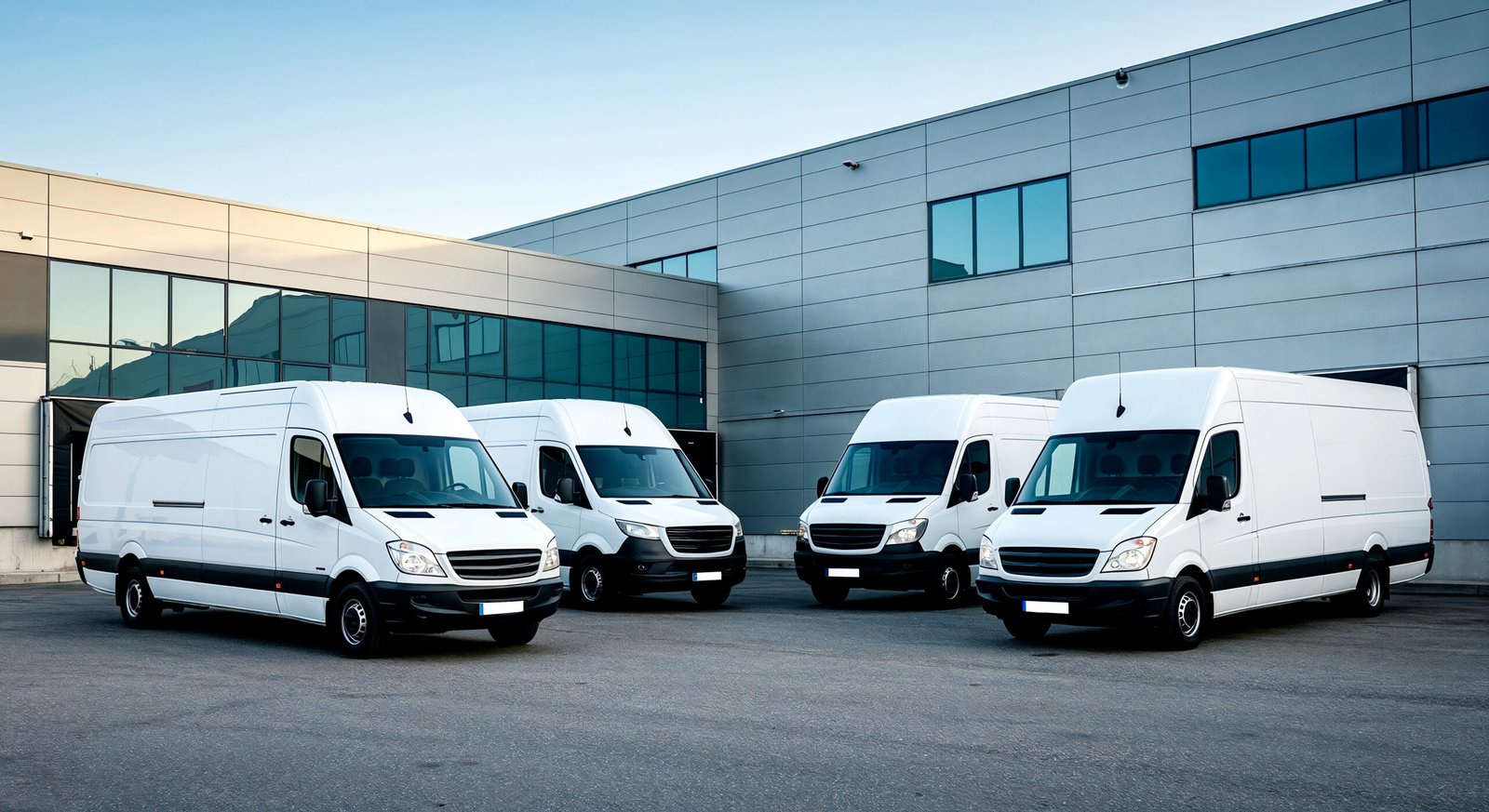
Light Commercial Vehicles are essential for last-mile delivery, cargo transport, and passenger mobility, requiring components that balance strength, durability, and efficiency. Casting technology provides the ideal solution by producing complex, lightweight, and high-strength parts at scale.
Major Application Areas:
-
Engine & Powertrain
-
Cylinder heads, engine blocks, crankcases, and manifolds designed for high thermal resistance.
-
Transmission housings, clutch casings, and gearbox components ensuring smooth power delivery.
-
Flywheels, pulleys, and crankshaft-related castings for vibration-free operation.
-
Chassis & Suspension
-
Cross members, brackets, and mounting components built for load-bearing and stability.
-
Control arms, hubs, and suspension parts designed to handle variable road and cargo conditions.
-
Braking & Steering Systems
-
Brake drums, calipers, and rotors that withstand heavy braking and frequent stops.
-
Steering knuckles, gear housings, and arms for precise handling and safety.
-
Axle & Driveline
-
Differential housings, axle casings, and related parts built for reliability under heavy loads.
-
Universal joints and coupling housings ensuring durability in long operational cycles.
-
Auxiliary Components
-
Fuel system housings, oil filter bases, water pump bodies, and compressor housings.
-
HVAC-related castings for better comfort in passenger LCVs.
Key Advantages of Casting in LCVs:
-
Lightweight + Strength: Improves fuel efficiency while maintaining structural integrity.
-
Precision & Consistency: Ensures defect-free, repeatable production for critical components.
-
Cost-Effective Manufacturing: Large-scale production with complex geometries at lower cost.
-
Durability & Reliability: Designed to withstand frequent use, high mileage, and varying cargo loads.